


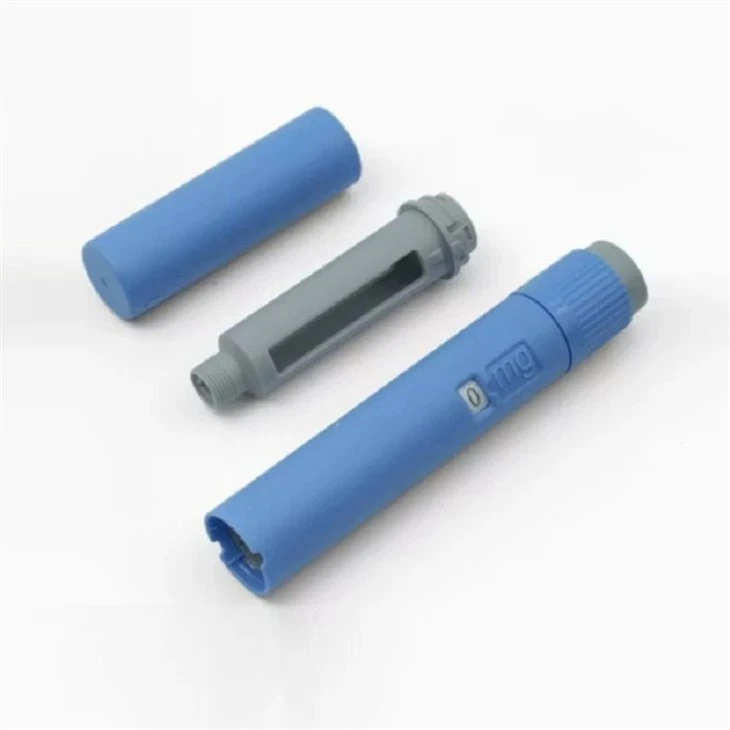

Product Specifications
|
Parameter |
Standard Configuration |
|
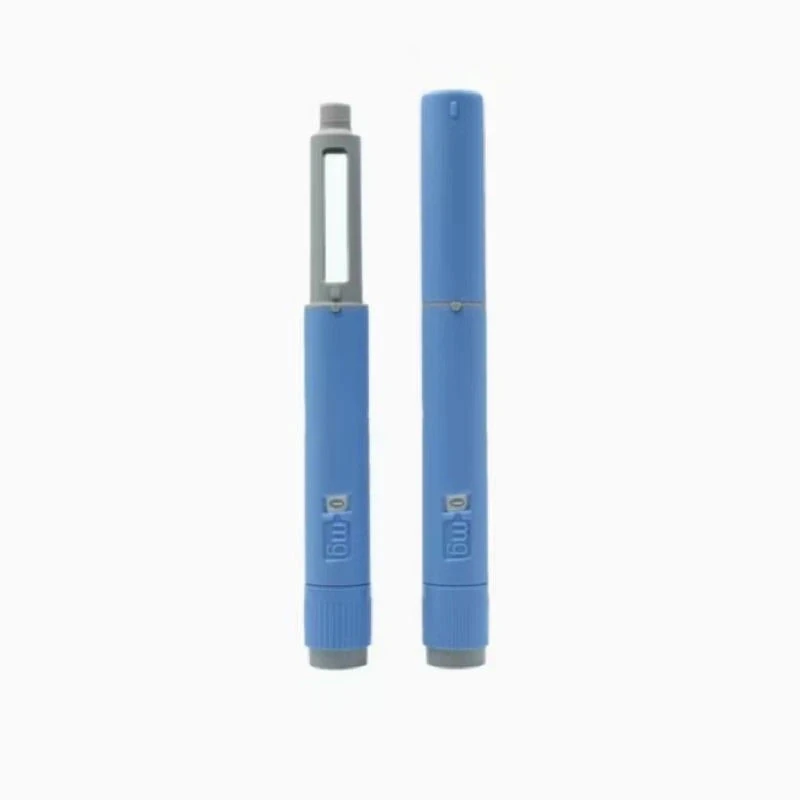
Device Format |
Spring-assisted variable-dose self-injection pen |
|
Primary Container |
Replaceable 3.0 mL standard cartridge; 9.7 mm nominal inner diameter for the standard pen interface |
|
Dose Range |
1-60 U |
|
Dose Increment |
1 U per dial click |
|
Maximum Single Dose |
60 U (0.6 mL in a U-100 configuration) |
|
Spring Output |
3 kg assisted push |
|
Activation Options |
Top push-button activation or skin-contact activation |
|
Needle Protection |
Automatic return cover after injection |
|
Dose Feedback |
Enlarged dose window with indexed marks and tactile clicks |
|
Spring Mechanism Warranty |
2 years |
Key Advantages
● 3 kg Spring-Assisted Actuation
A 3 kg spring push assists needle insertion and drug delivery. The stored force reduces the hand effort needed to complete the injection stroke, including cases where hand strength is limited or cartridge resistance is higher.
● 1-60 U Dose Dial With Enlarged Cues
The published version combines a 1-60 U dose range with a large textured grip and enlarged dose-window features. Indexed dial marks and tactile clicks make dose selection easier to read and count during home use without requiring fine hand movements.
● Automatic Needle Cover
The needle cover returns automatically after the injection. The needle remains shielded while the used device is handled and prepared for disposal in home-care or caregiver-assisted settings.


Customization Options
Activation may use a push button or skin contact. Cap removal, spring actuation, needle protection and post-use locking are developed as one operating sequence. Spring output and delivery time are matched to the approved 3 mL cartridge or prefilled container and its resistance.
Housing design is adjusted for the intended user group, including grip geometry, viewing area and end-of-dose feedback. Surface texture, colors and printed instructions can change without altering the approved activation sequence.

Customization Process
Use-Case Definition
The container, intended user and complete injection sequence are confirmed first. Together they define the approved use case for development.
Architecture And Risk Review
The spring drive, needle protection and lockout points are arranged in sequence and reviewed against foreseeable misuse.
Prototype And Human-Factors Build
Functional samples use representative components so grip, activation and feedback can be assessed in the intended order of use.
Engineering Verification
Testing measures delivered volume, trigger force and shield return against the approved limits. Environmental or drop tests are added only when the project requires them.
Pilot Assembly
A pilot run checks spring installation, molding repeatability and the inspection method under production conditions.
Controlled Production
Commercial assembly follows the released specification. Final function checks and batch traceability review are completed before release.
Quality Control
Springs, the container interface and needle-protection components are checked before assembly because they control actuation, plunger travel and post-use shielding. Functional inspection follows the full sequence from activation to delivery completion and automatic shield return. Trigger force, residual volume and ISO 11608-5 evaluation are included only when required by the approved project scope. Each finished device receives an activation and appearance check before packing, with results recorded by lot.
FAQ
Q1: How long does custom sample development take?
A1: New tooling and sample development normally take 40-60 days. Timing depends on the activation mechanism, mold structure, number of parts and required verification.
Q2: How is the device packaged for export?
A2: Available pack formats include trays, blisters, pouches and cartons. The approved pack must protect the device and meet export-shipping requirements.
Q3: Is a self injection device the same as an autoinjector?
A3: Not necessarily. A self injection device may automate both needle insertion and drug delivery, or assist only one part of that sequence. The final product architecture depends on the specific program.
Q4: What warranty is listed for the spring mechanism?
A4: The standard product page states a two-year warranty for the spring mechanism. Covered components and the claim procedure are defined in the confirmed sales contract.
Hot Tags: self injection device, China self injection device manufacturers, suppliers, factory, Civilian syringe, Disposable Pen Injector, Hormone pen type syringe, Insulin syringe, medical syringes, Single use Pen Injector


